Applications / Biofuels
Radiocarbon (¹⁴C) analysis of the biogenic carbon content of biofuels and fuel blends with C14-SCAR.
Biogenic Content Analysis of Fuels with C14-SCAR
Renewable-fuel mandates, greenhouse-gas credits and sustainability certificates all depend on one number: how much of the carbon in a fuel comes from biomass. Refiners, blenders and certification bodies have to measure, document and defend that biogenic share batch after batch, and fuel produced by co-processing makes this especially hard to do.
Radiocarbon (¹⁴C) analysis gives a direct answer. Carbon from living biomass carries the present-day atmospheric ¹⁴C signature, while fossil carbon from crude oil, coal or natural gas contains none. Measuring the ¹⁴C content of a fuel therefore measures its bio-based carbon fraction, whatever the process that produced it.
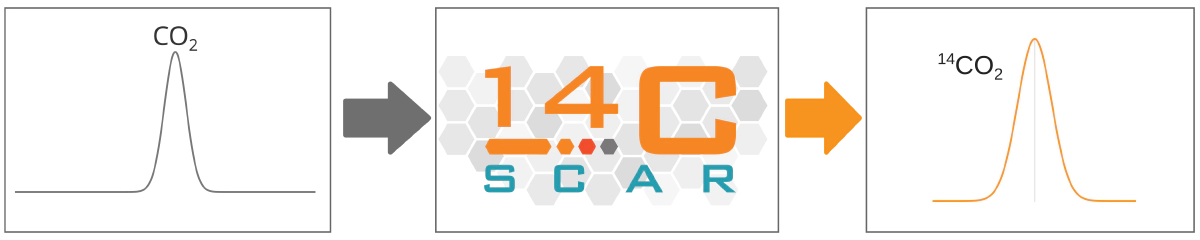
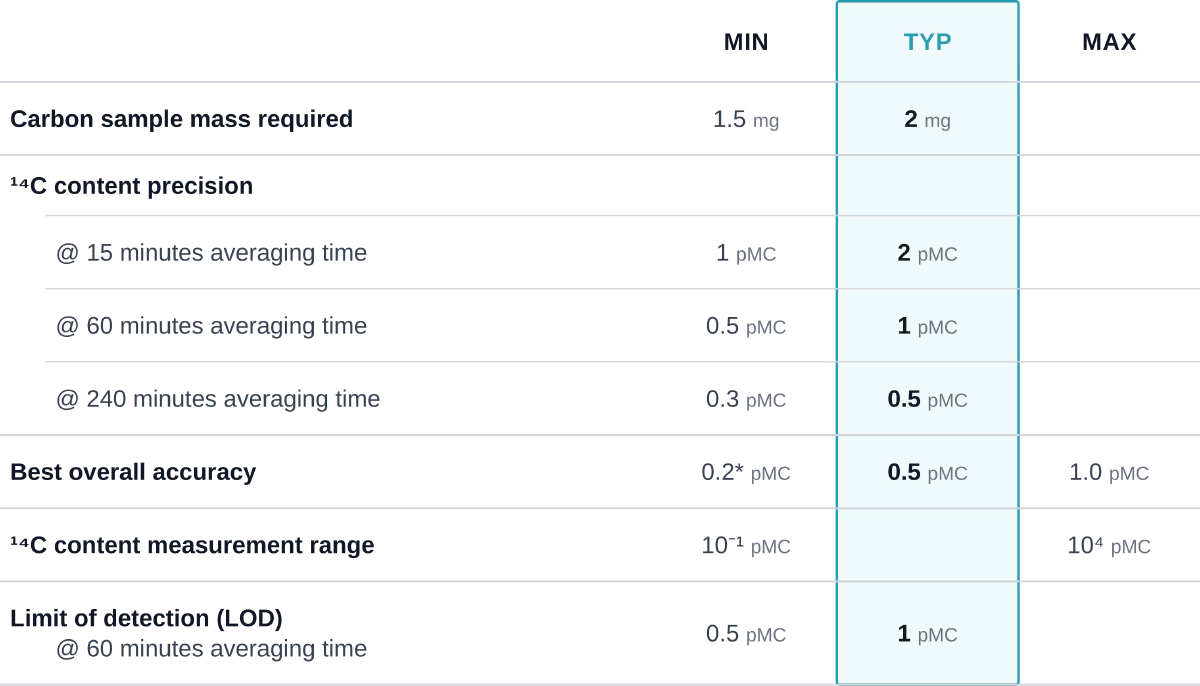
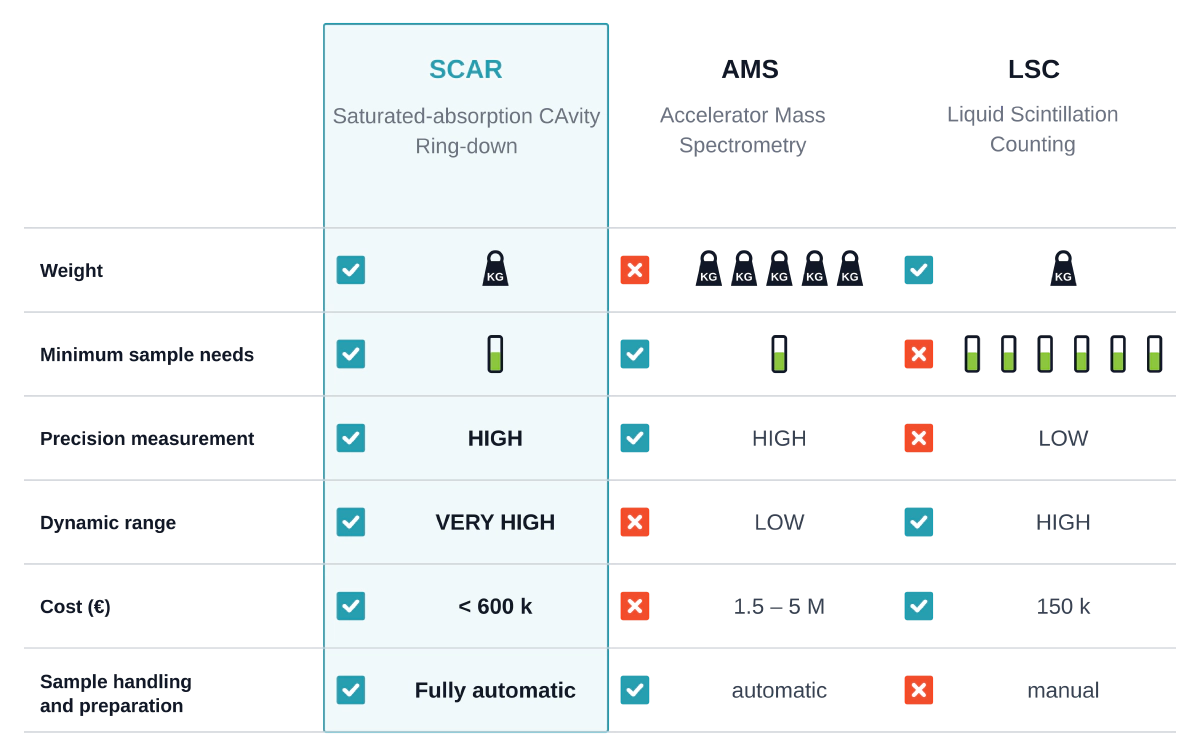
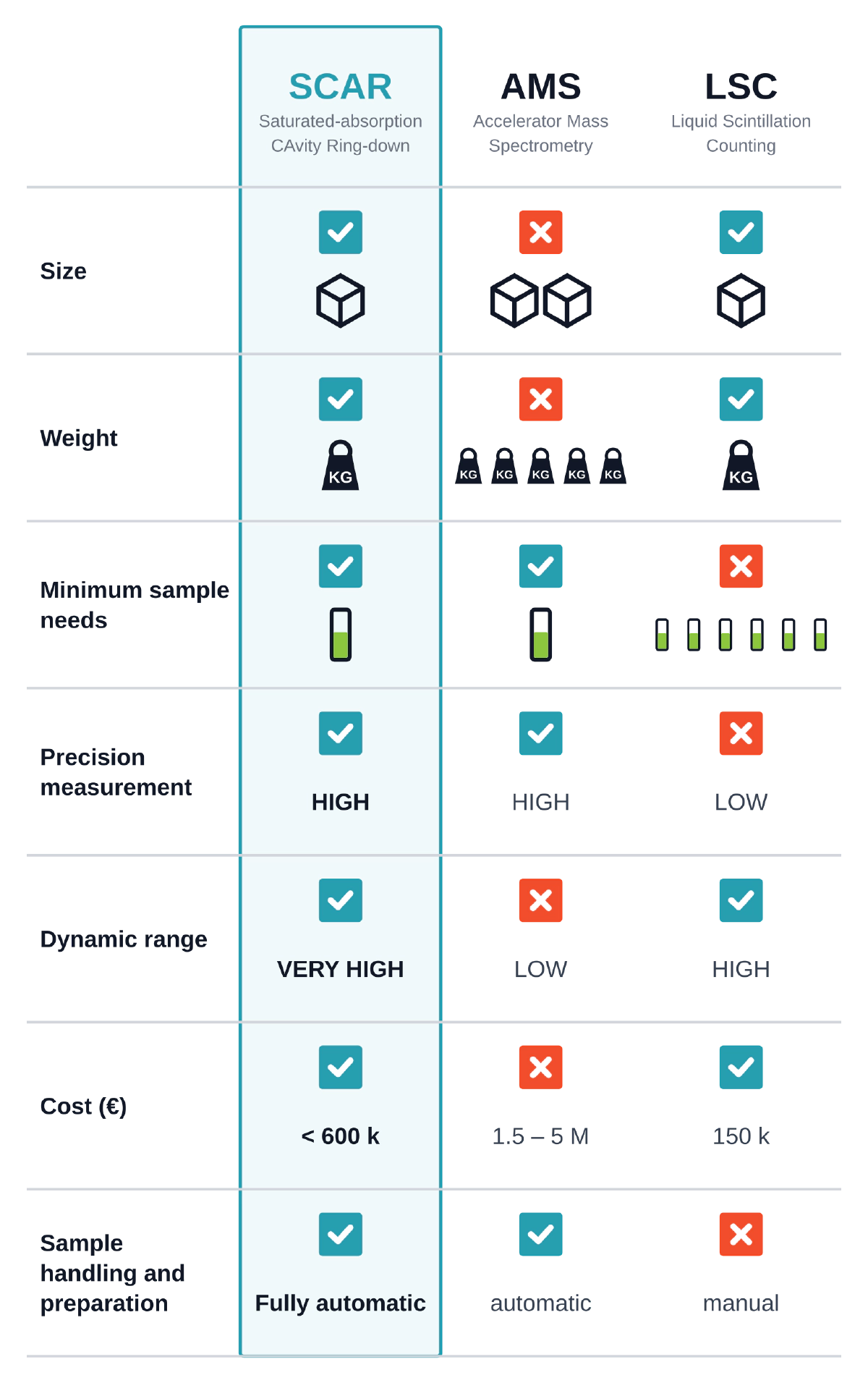
C14-SCAR brings this measurement into your own laboratory. It is a table-top, laser-based ¹⁴CO₂ analyzer that delivers close-to-AMS precision without an accelerator facility, scintillation cocktails or graphitization, and with results in hours instead of weeks.
Who it is for
- Co-processing refineries. Get a fast, in-house check of the biogenic share of FCC, hydrotreater and hydrocracker products to support quality control, mass-balance verification and certification.
- HVO/HEFA, SAF and biodiesel producers. Confirm the renewable content of renewable diesel, sustainable aviation fuel and FAME before release, and detect fossil contamination early.
- Blenders and fuel distributors. Check the bio-share of incoming components and finished blends against what has been declared.
- Certification bodies, auditors and authorities. Independently test retained samples, investigate deviations between the declared and the measured bio-content, and support scheme audits.
- Testing laboratories. Add ¹⁴C analysis to an existing fuels laboratory without building an AMS facility.
Why measure in-house
Under the EU co-processing rules, the biogenic share must be checked with ¹⁴C testing at least every four months, and again whenever feedstock, process or product composition changes by more than 5 % (see the Regulations tab). When samples go to an external AMS laboratory, results can take days to weeks, and a deviation may only come to light long after the product has been sold and its certificates issued.
With C14-SCAR on site you can:
- Close the loop on your main method. Compare ¹⁴C results with your mass-balance or yield calculation as often as you need, not only when the next external test is due.
- Catch deviations before an audit does. Under EU rules, a gap of more than 1 % in absolute terms between the declared and the ¹⁴C-measured bio-content is a major non-conformity. Frequent in-house checks let you correct course before a certificate is at risk.
- Follow process changes. Check new feedstocks, co-processing ratios or catalyst changes the same day.
- Screen before you send. Pre-screen samples so that external, accredited tests are spent on the batches that matter.
- Build your own records. Keep a measurement history for every batch alongside the retained samples that auditors can request.
What it measures
Bio-based and fossil carbon are chemically identical. Polyethylene made from sugar cane and polyethylene made from oil are the same molecule, and no chemical analysis can tell them apart. Radiocarbon is the only property that differs, which is why it has become the reference method for bio-based content.
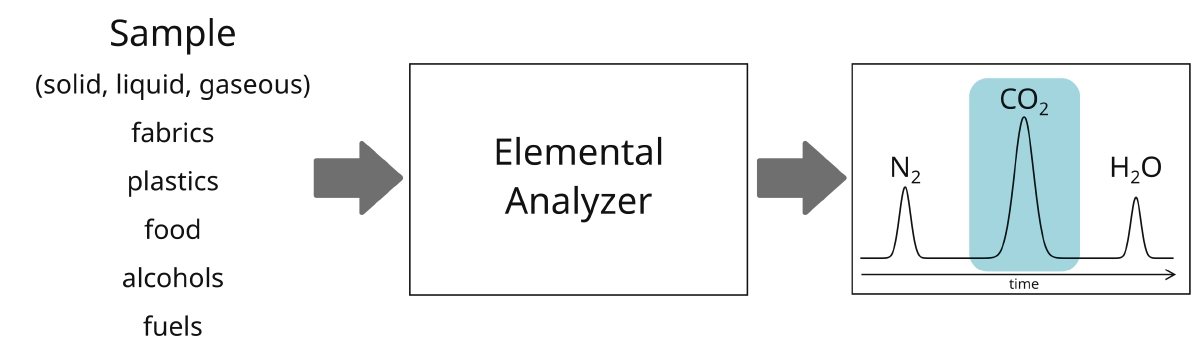
Because C14-SCAR always measures the CO₂ produced by combustion, the result does not depend on the chemical composition of the sample. A single method covers the whole fuel chain:
| Category | Examples |
|---|---|
| Finished and co-processed fuels | Diesel, gasoline and jet fuel from co-processing; HVO/HEFA renewable diesel; SAF and SAF blends; marine fuels |
| Bio-components | FAME biodiesel, bioethanol and ethanol blends, bio-naphtha, pyrolysis and bio-oils |
| Feedstocks | Used cooking oil, animal fats, vegetable oils, tall oil and other residues, checked for fossil adulteration |
| Gaseous samples | Pure CO₂ (for example collected from fuel-gas combustion or stack sampling) or samples stored in ampoules, loaded through the manual loading port |
Results are reported in percent Modern Carbon (pMC) and converted to bio-based carbon content following the reference standards (see the Regulations tab).
What ¹⁴C can and cannot tell you
¹⁴C analysis distinguishes biogenic from fossil carbon. It reliably reveals fossil carbon in a product sold as renewable, and it quantifies the bio-share of co-processed fuels. It cannot tell different biomass sources apart: used cooking oil and virgin vegetable oil both measure around 100 pMC. Feedstock origin and sustainability therefore still depend on the chain-of-custody documentation that certification schemes require, and ¹⁴C testing complements it.
Proven on fuels
SCAR results on aviation-fuel blends and pyrolysis bio-oils have been confirmed against AMS and against gravimetric mixing ratios, as published in Advanced Photonics Research (2021). In the draft revision of the European radiocarbon standard EN 16640, SCAR spectroscopy is now included as Method C, alongside LSC and AMS (see the Regulations tab).
Not ready for an instrument yet? ppqSense also offers biofuel testing services .
Contact Us
Contact us for information, quotes, or technical support