Radiocarbon Detection

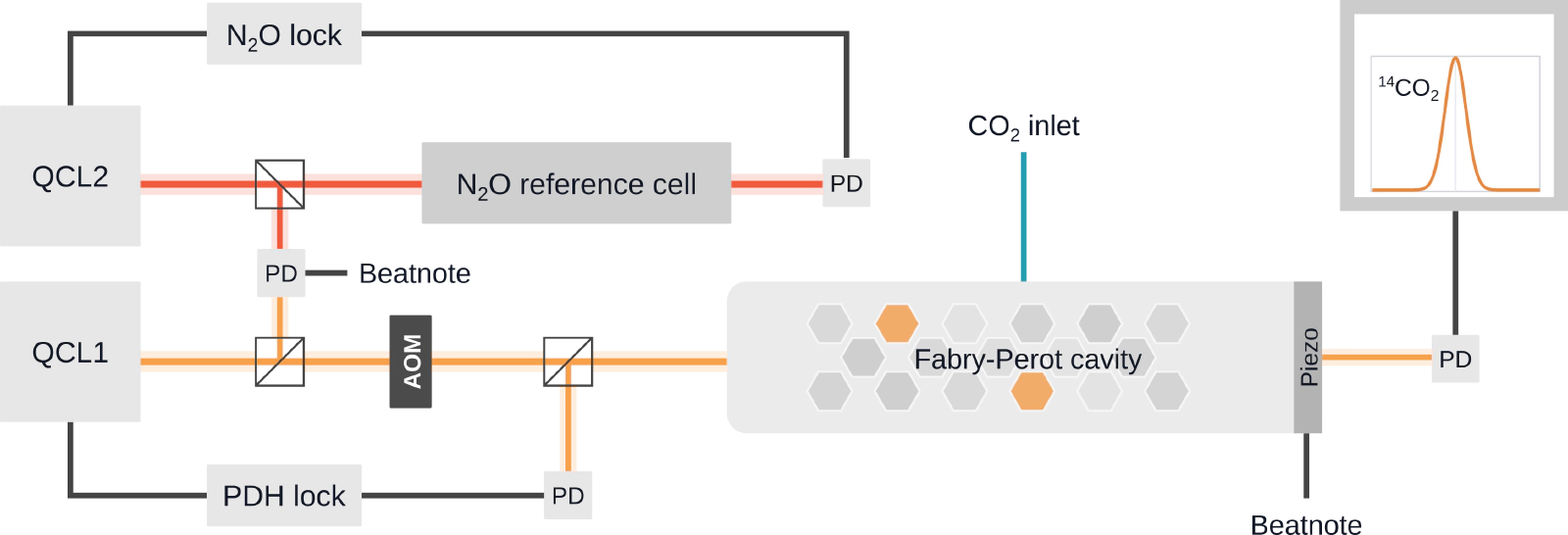
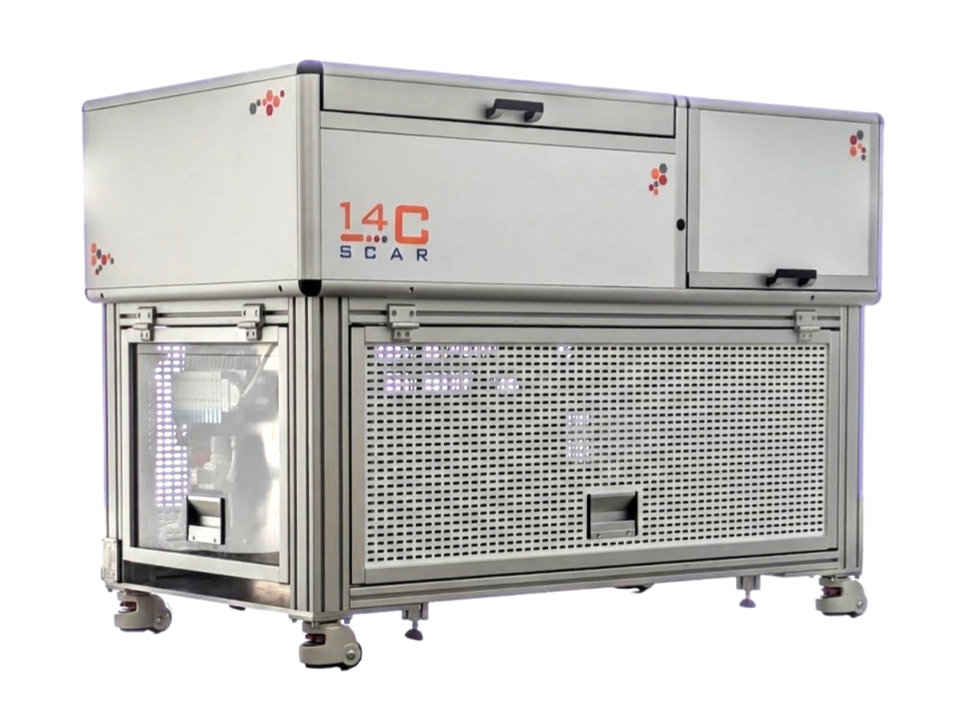
C14-SCAR: Laser-Based Radiocarbon Measurement Device
A high-precision, laser-based, radiocarbon detection solution
- Fast Radiocarbon Measurement (<20 min)
- Particle sensitivity of one part per quadrillion (ppq)
- Smaller and more affordable than competing technologies
Where Radiocarbon Comes From
Radiocarbon forms continuously in the upper atmosphere, where cosmic rays convert nitrogen into ¹⁴C. It oxidizes to CO₂, mixes with the rest of the atmosphere and enters plants through photosynthesis, and from plants the whole food chain. As long as an organism lives, its carbon stays in balance with the atmosphere. When it dies, the exchange stops and its ¹⁴C begins to decay away (with a half life of ~5,700 years). Material that has been underground for millions of years has none left.
What it can tell us
Due to its organic origin and predicable decay rate, Radiocarbon functions as a label, provided by nature, for identifying the biogenic origin or age of any carbon-containing material.
A few of its identified uses include:
- determining the fossil fraction of materials, liquids and gases
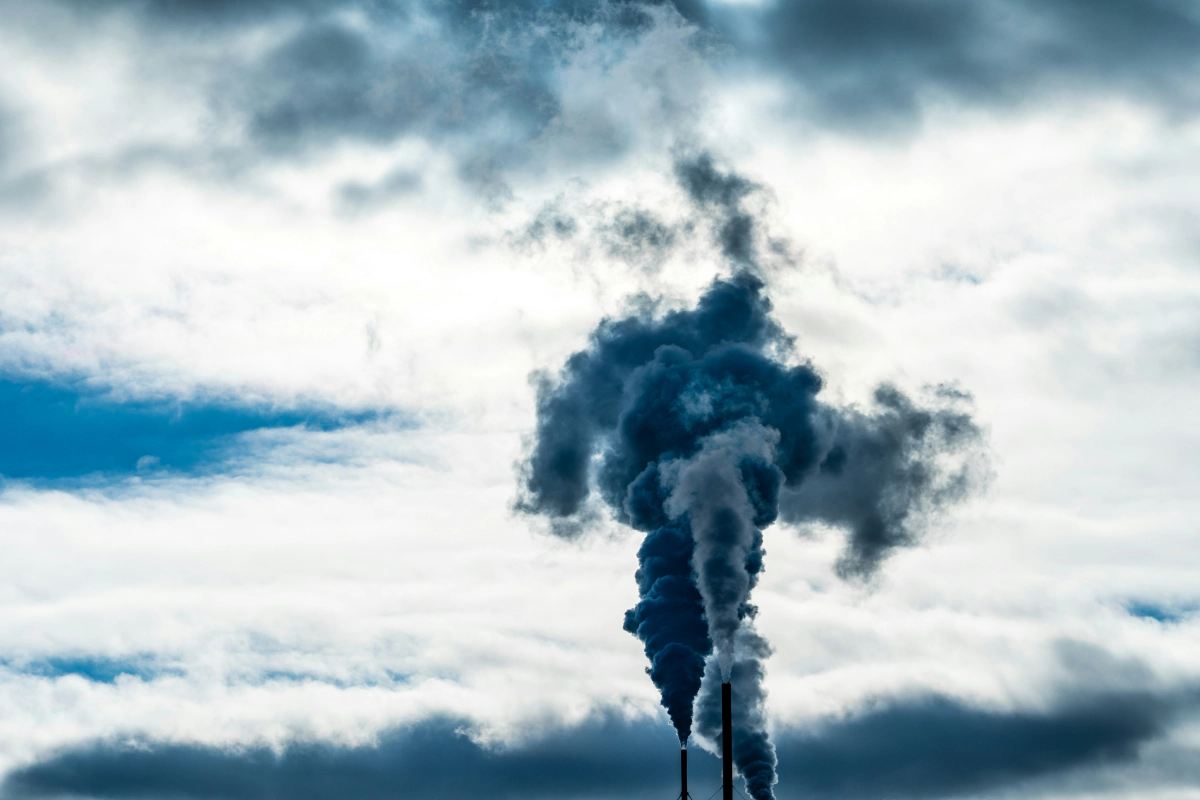
- tracking pollutants in air samples
- dating archological finds
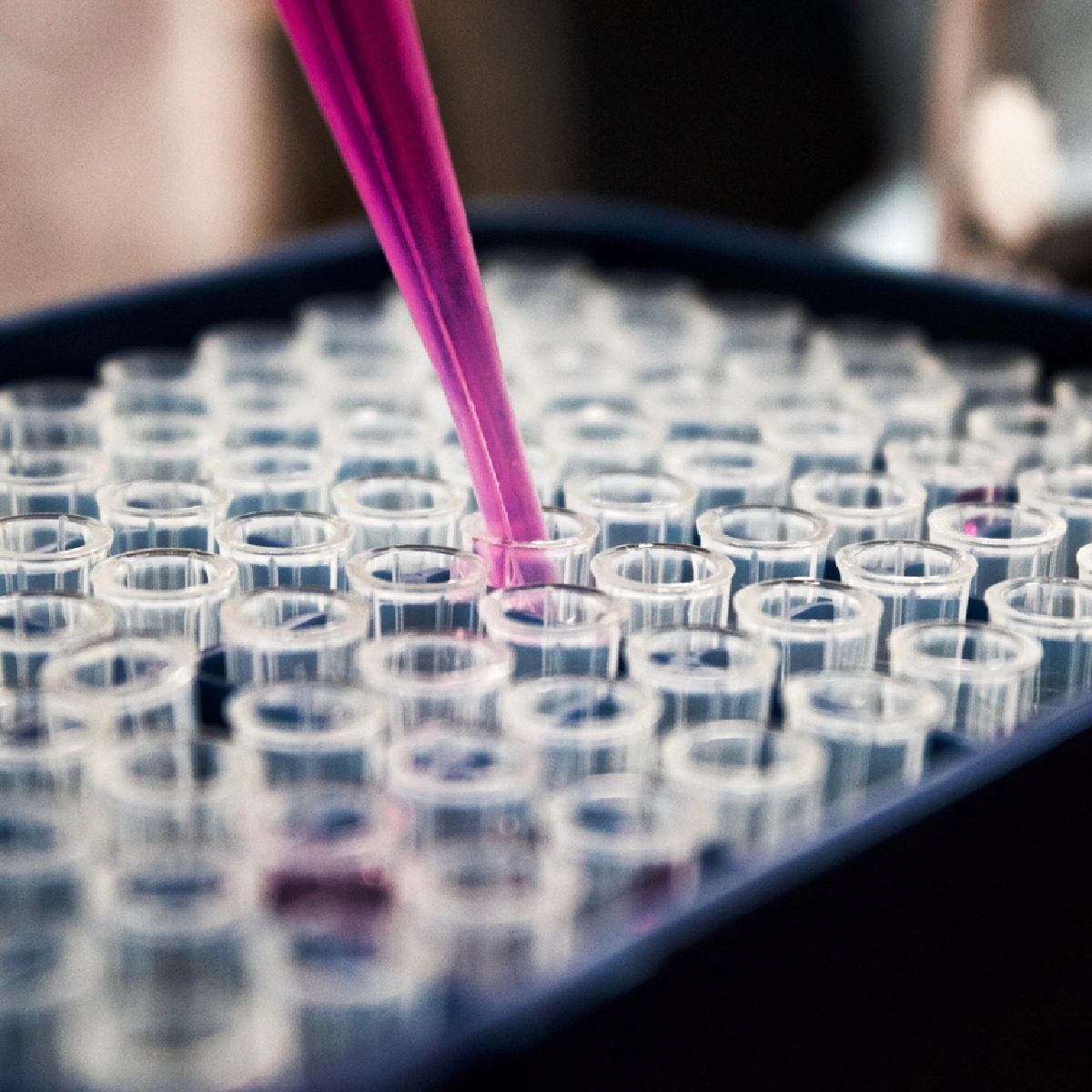
- serviing as a metabolically-safe tracer for phamacological studies

See C14-SCAR in Action
Contact Us
Contact us for information, quotes, or technical support